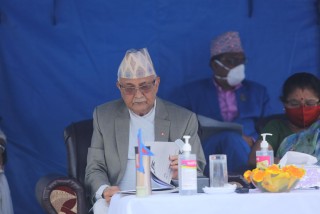


[Kathmandu, Nepal, May 20, 2021] Joint-handedly with the governments, universities and industrial partners, Huawei will support South Asia countries such as Bangladesh, Sri Lanka and Nepal to cultivate 100,000 digital talents over the next five years, Huawei spokesperson said on Thursday at the Digital Talent Regional Summit online.
Themed “Cultivating a Talent Ecosystem for Inclusive Digital Prosperity,” the summit brought together ministers and scholars from the three countries, experts and representatives from UNESCO and the ICT industry, to explore collaborative initiatives for closing the digital skill gaps and facilitating the digital transformation in the post-pandemic economic recovery.
“We believe the talent ecosystem is the cornerstone of the economic recovery, and a long-lasting digital future. However, the lack of digital skills is one of the biggest challenges facing many countries,” said Jay Chen, vice president of Huawei Asia Pacific at the summit, “In the next five years, Huawei expects to develop more than 100,000 ICT talent and build a vibrant digital talent ecosystem in this dynamic region, especially Bangladesh, Sri Lanka and Nepal.”
The ministers appreciated the initiative of Huawei to support the government on providing ICT solutions, training the digital talents, and enabling the digital transformation.
“Digital talents’ development is always an important element of digitization, and Government of Nepal is always working to expand technology in the country and make digital Nepal campaign a success by creating a roster of technology experts. Huawei has always been providing technical support and expanding ICT related projects in Nepal.” said Hari Bashyal – Secretary, Ministry of Communicatins and Information Technology, Government of Nepal.
The secretary stressed that the digital transformation will bring dramatic changes in society, and it is vital to upskill the youth. The government, educational institutions and private sectors should continue to collaborate on the digital talent ecosystem.
Scholars and experts from the region participated in the panel discussion at the event explored the recommendations for addressing the talent challenges, including translating digital vision into accessible talent development solutions, developing standards and skills frameworks for ICT roles, upgrading and channelizing the overall academic infrastructure, and facilitating digital talent mobilization.
“The pandemic has put us with many challenges, and it has created a huge digital gap. Technology is the driving force to reduce this gap, which people need to adapt to. In my opinion, courses on AI, big data should start right from school, and we are working on it. I am very glad to see universities, industries, government, and Huaweihave come together to build an effective digital talent ecosystem.” said Prof. Dr. Manish Pokharel, Dean, School of Engineering, Kathmandu University, Nepal.
Representatives from international organization also emphasized the importance of closing the digital skills gap for sustainable development.
“In order to cultivate a talent ecosystem for inclusive digital prosperity, we have to promote digital inclusion, mainstream digital skill developments, and foster digital-pedagogical transformation to ensure the quality of learning.Huawei is committed to this action and would like to build on its partnership with UNESCO which started with the ‘TECH4ALL’ initiative in Africa, with the aim for global expansion. It is a long-term, digital inclusion initiative that targets empowering the world’s maximum population with essential digital skills,” said Ms. Beatrice Kaldun, Head of Office and UNESCO Representative to Bangladesh.
During the pandemic, Huawei has cooperated with partners including the UNESCO to provide digital solutions and distance learning resources to students and professionals. The tech company plans to extend the digital talents cultivation initiatives, and provide an end-to-end Huawei Talent Platform, which will help learners to improve their capabilities and assists them with career development by offering a one-stop service, covering online course, examination, certification, and job seeking.
“We hope our education programs not only reaffirms our commitment to social responsibility, but also prepares the next generation of experts to design and navigate this digital landscape. Our future depends on it,” said Jay.
—End—
About Huawei
Founded in 1987, Huawei is a leading global provider of information and communications technology (ICT) infrastructure and smart devices. We have more than 194,000 employees, and we operate in more than 170 countries and regions, serving more than three billion people around the world.
Our vision and mission is to bring digital to every person, home and organization for a fully connected, intelligent world. To this end, we will drive ubiquitous connectivity and promote equal access to networks; bring cloud and artificial intelligence to all four corners of the earth to provide superior computing power where you need it, when you need it; build digital platforms to help all industries and organizations become more agile, efficient, and dynamic; redefine user experience with AI, making it more personalized for people in all aspects of their life, whether they’re at home, in the office, or on the go.
For more information, please visit Huawei online atwww.huawei.com
About Huawei Nepal:
Huawei Nepal has been serving for 21 years in Nepal ICT industry. Since 1999, Huawei brought 2/3/4G Technologies and Solution to Nepal, helped telecom operators to quickly deploy the communication network, including in the remote area, enhancing the quality of telecommunication service, building the physical foundation of “Digital Nepal”. More than 28 million population of Nepal are benefiting from Huawei`s solution. From the past 21 years, Huawei Nepal has been committed to be compliant with local regulations and law. Huawei has been a responsible corporate citizen in Nepal. In local contribution, Huawei created 10,000+ jobs directly and indirectly from the past 21 years in Nepal. In 2015, Huawei helped Nepal Government and telecom operators to quickly recover the network after the earthquake, made great contribution to the disaster rescue by making telecommunication smoothly. Huawei also helped the telecom operators to build the wireless base station site in Everest Base Camp, which help to connect the communication blind spot to the outside world completely. In the future, Huawei will continue to dedicate to Nepal, to bring more technology like 5G, cloud and AI to build a better Digital Nepal.